In the heart of the Montseny Massif, a natural park located an hour north of Barcelona, the municipality of Tagamanent has officially inaugurated its new pilot wool-processing plant. Attending the opening on behalf of the Bioboost project offered a first-hand look at how a small rural village can drive meaningful change: revitalising a traditional resource, creating new economic activity, and proving that circularity is not a slogan but a tangible, everyday practice.
Wool —a material that has continuously lost value over recent decades, often becoming an economic burden for farmers— is being given a new role here. Tagamanent has chosen to reverse the trend and turn wool into an environmental, economic and educational opportunity.
A facility designed to close loops
Even before entering the building, the surroundings reflect a clear circular approach. Raw wool arrives directly from local shepherds and is stored in large sacks under a restored outdoor shelter that protects the material from humidity and weather exposure.
Nearby, a biomass boiler—fuelled by forest wood chips produced locally through the Estella del Montseny project—provides hot water for the washing stage and heats several municipal buildings. This integration reinforces one of Tagamanent’s key ideas: developing solutions that connect local economies with sustainable resource management.
A hybrid water system completes the loop. A rainwater tank supplies several stages of the process, reducing the use of drinking water. Meanwhile, wastewater is collected and sent to the Besòs–Tordera Consortium, where it is valorised into biogas. On the roof, a 50 kW solar photovoltaic installation powers part of the facility and reduces its energy footprint.
Together, these elements make the plant a living demonstrator of the bioeconomy in practice: renewable energy, efficient resource use, and minimal waste generation.
From raw wool to final products: the full transformation pathway
Upon arrival, the wool is first classified by quality. From here, two processing routes begin: one for lower-quality wool, unsuitable for textile use, and another for higher-quality wool that will follow a more refined technical pathway.
1. Lower-quality wool: from discarded material to natural dyes and organic fertiliser
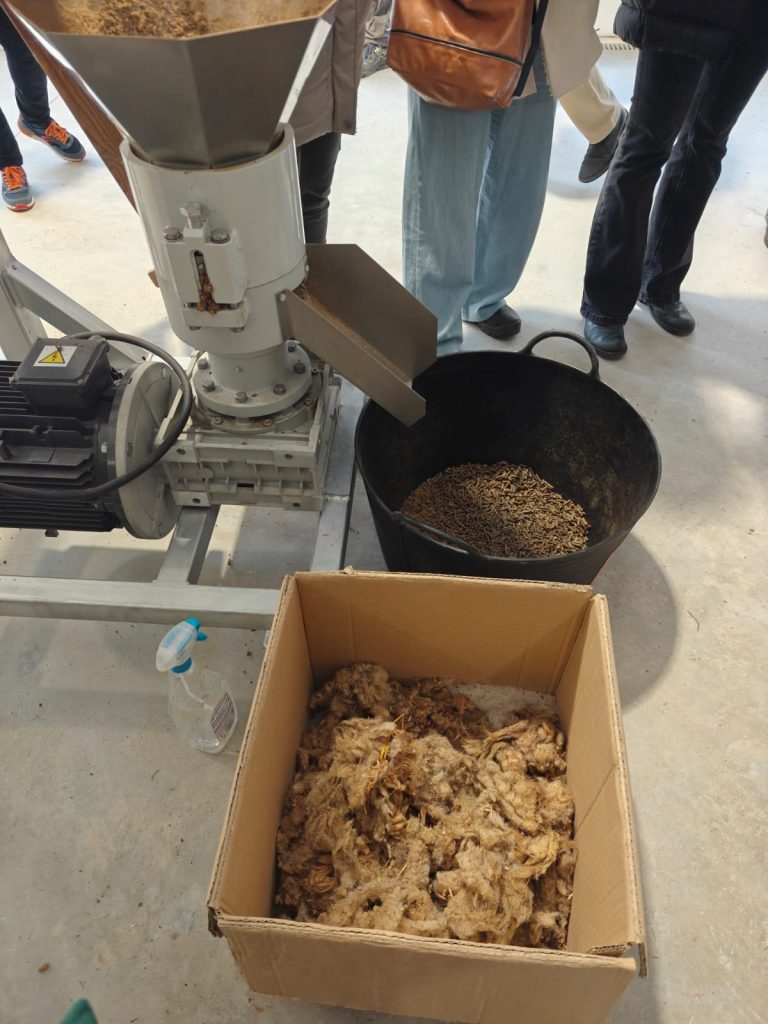
The wool in poorer condition —material that in many regions ends up as waste— is given two new functions in Tagamanent. Part of it is used in natural dyeing projects in collaboration with Archroma, exploring how wool can replace synthetic dyes in certain textile applications. The rest enters the pelletising line.
The wool pelletiser transforms this fibre into organic fertiliser pellets that are easy to apply, moisture-retentive and slow-release. The machine processes around 20 kg per hour —approximately 160 kg per day or up to 40 tonnes per year in regular operation. Although small in scale, it is more than sufficient to validate technology and market interest.
One particularly promising aspect is that the pelletiser is mobile. The municipality and technical team are exploring the possibility of transporting it to other Catalan regions, allowing farmers to pelletise wool on site. This could reduce logistics costs and offer a viable solution in territories where wool currently has no economic outlet. If implemented, this mobile system could become a key tool for scaling circular practices beyond Tagamanent.
2. Washing and preparation: when higher-quality wool enters its technical pathway
Wool in better condition follows a dedicated textile-processing line. Its first step is thermal washing in an 18-kg Girbau industrial machine, operating between 50 and 65 ºC with water heated by the biomass boiler. This removes grease, dirt and organic matter, producing clean wool at a rate of roughly 4 kg per hour—well aligned with the plant’s pilot-scale ambition.
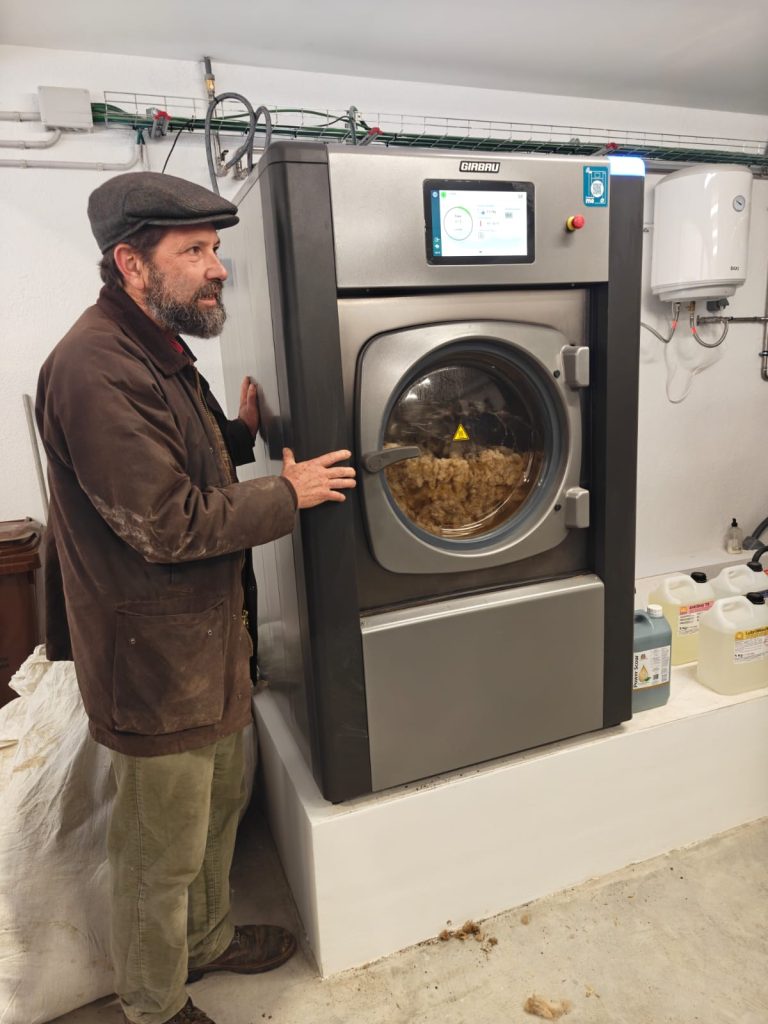
Drying combines two options: on one hand, a Girbau industrial drying cabinet ensures controlled drying; on the other, natural air-drying is frequently used to reduce energy consumption.
Once clean and dry, the wool moves to the opener (picker/opener), a machine designed to gently open and loosen the fibre mass without breaking it. It separates clumps, aerates the wool and begins removing small impurities such as vegetable matter and dust. The opener can also blend different lots or colours of wool and prepares the fibre for storage in ventilated big bags.
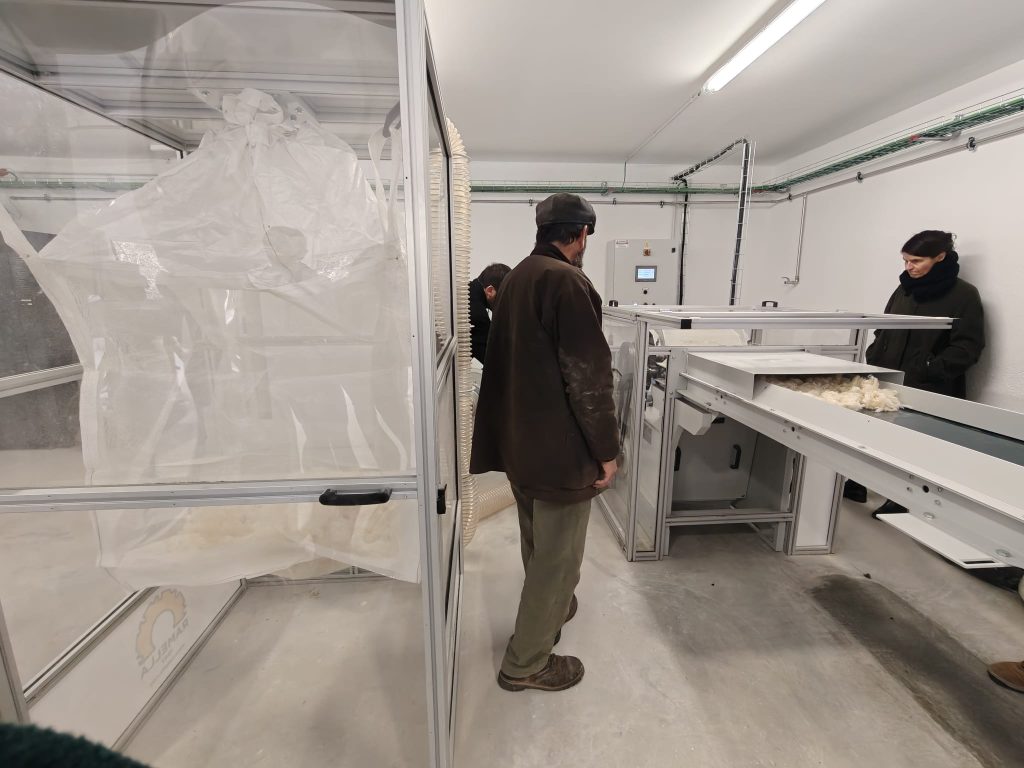
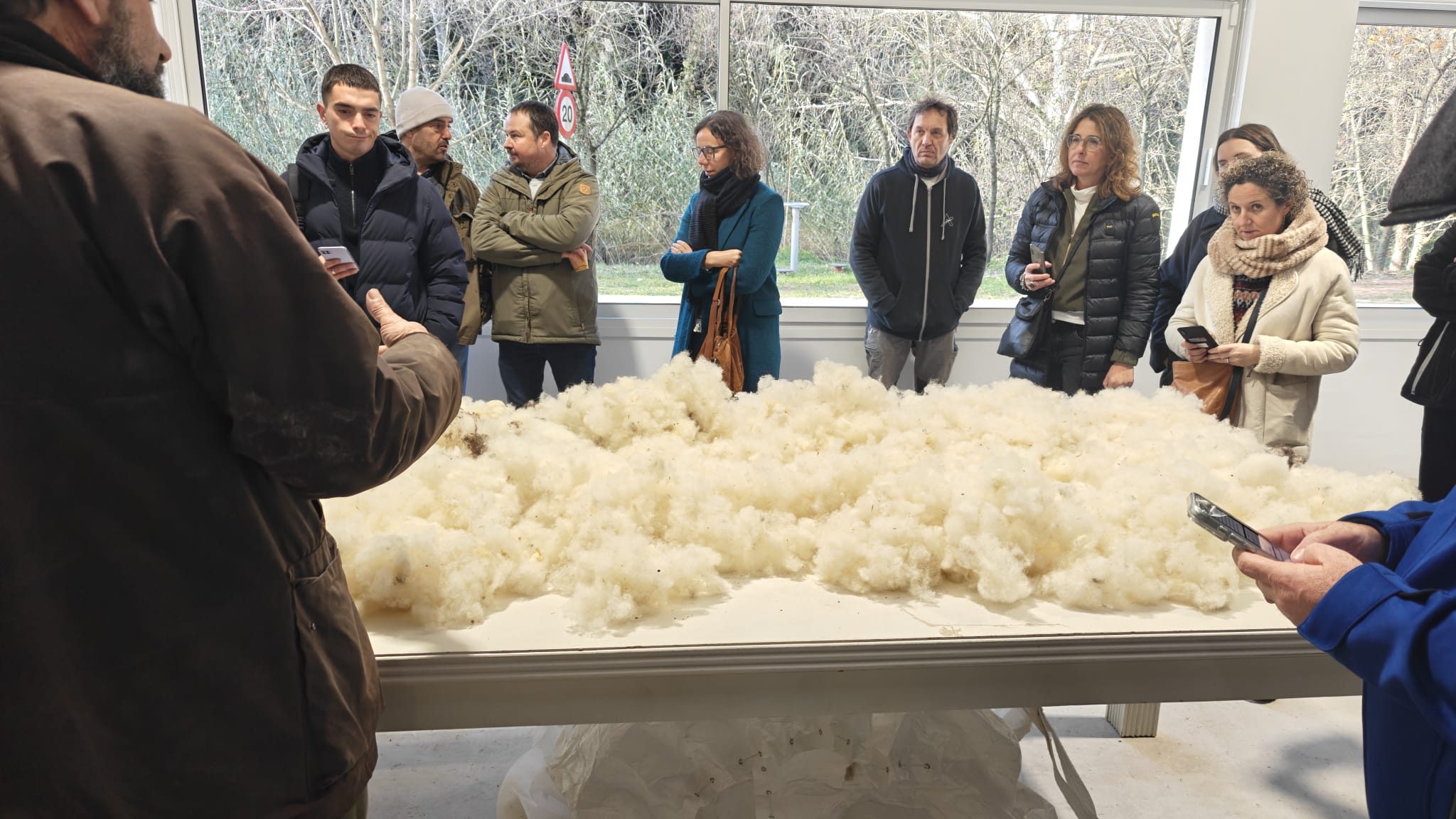
Alongside this, a manual sorting table allows the team to remove any remaining impurities. A light antistatic spray prevents fibre electrification, ensuring a smooth transition to the carding stage.
3. Carding and transformation: batts for new materials and slivers for spinning
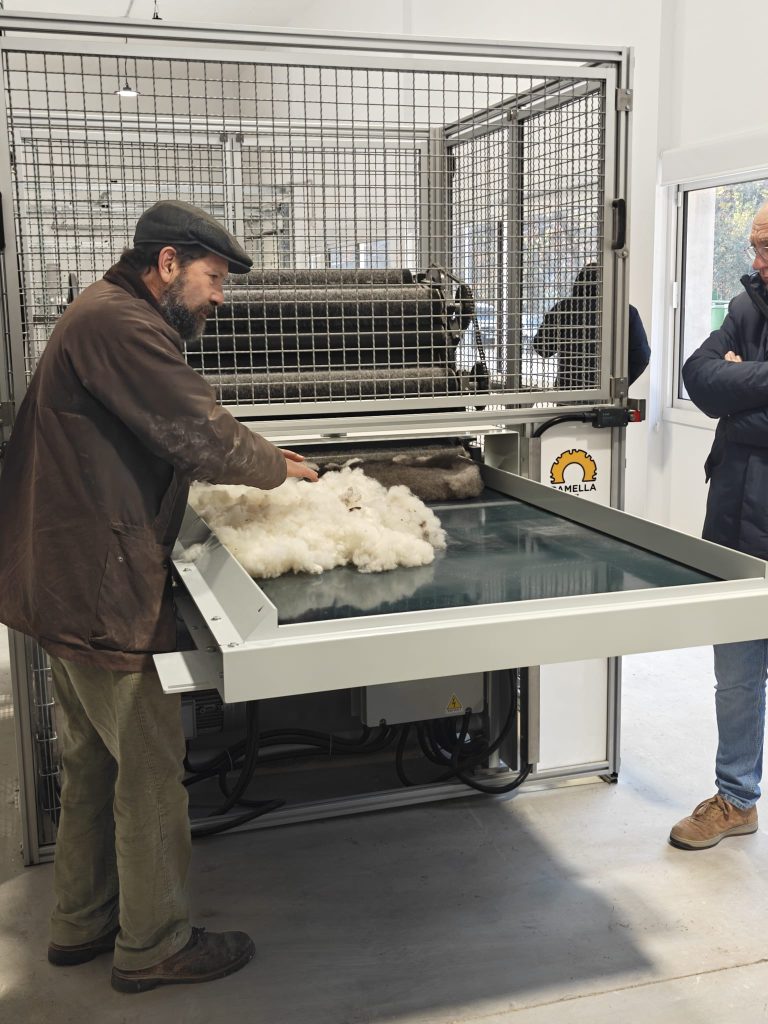
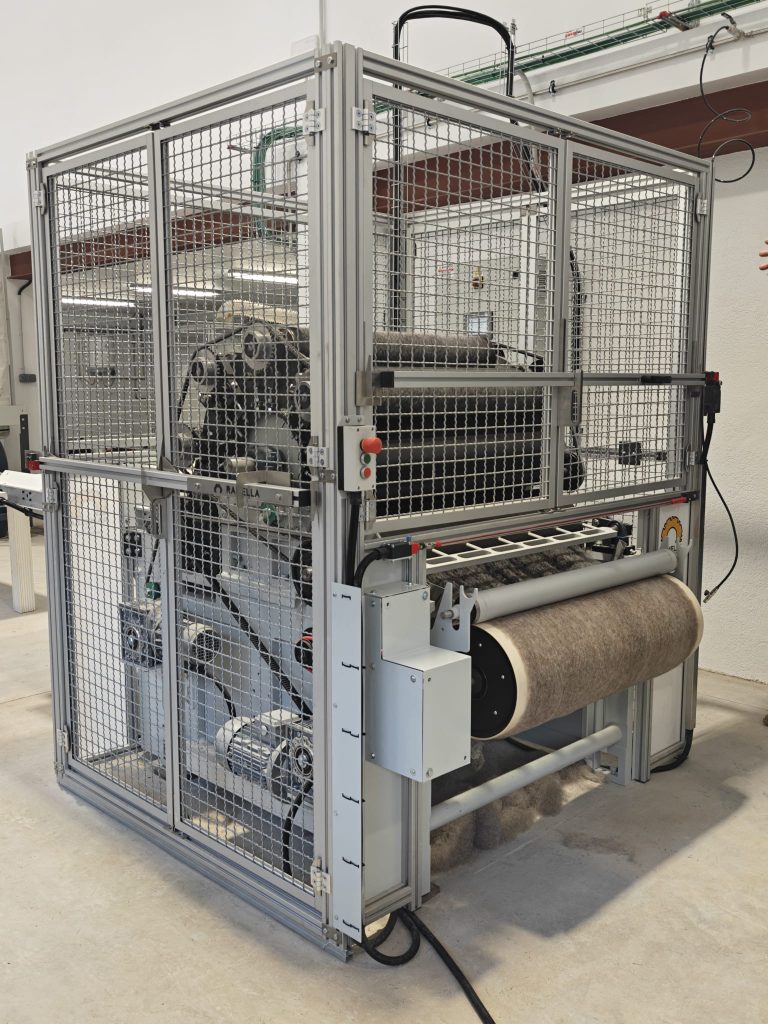
The next phase takes place in the carding machine, one of the core components of the facility. It transforms the opened wool into a consistent, aligned web, ready to become either batts or slivers.
- Batts: continuous layers of carded wool, suitable for thermal and acoustic insulation, felts, and other non-woven applications.
- Slivers: continuous strands of loosely compacted fibre, ready for subsequent drafting and spinning.
To further refine the slivers, the plant incorporates two specialised machines:
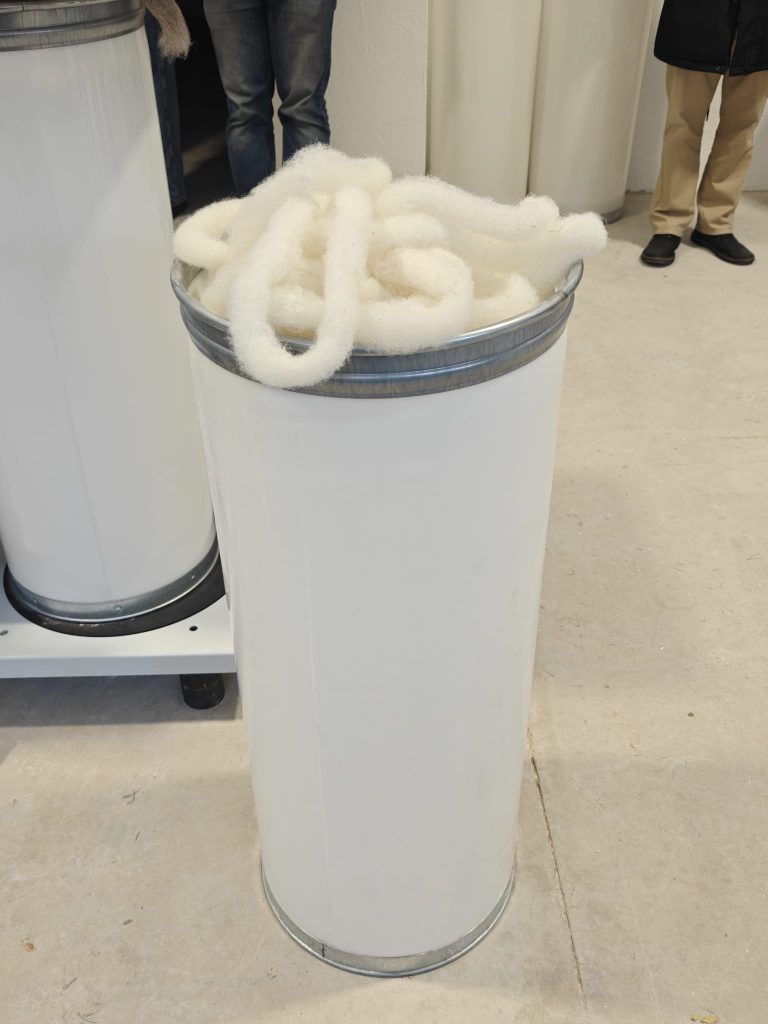
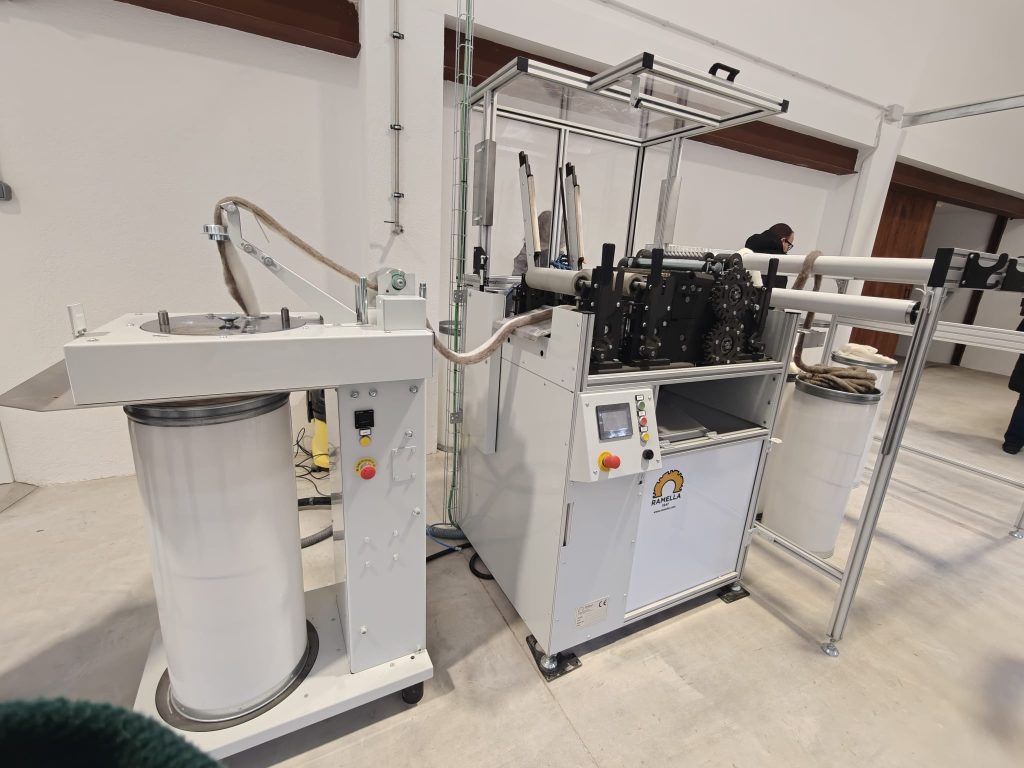
First, the can coiler – which coils the sliver neatly into cans, measures length automatically and divides production into identical units to reduce waste and optimise workflow.
After, the pin drafter (gillbox) – which evens out irregularities, aligns fibres more precisely and produces a uniform sliver suitable for high-quality spinning. This stage enhances fibre cohesion and maximises the natural lustre of the final yarn.
At the end of the process, the Tagamanent plant produces three main outputs:
- Pèl·lets fertilitzants de llana,
- Carded wool batts for material applications,
- Textile slivers ready for spinning.
A strategic asset for Catalonia’s circular bioeconomy
The Tagamanent plant aligns closely with Catalonia’s bioeconomy strategy: it gives value to an underused resource, prevents wool from becoming waste, stimulates new markets, reduces emissions through renewable energy, and revitalises economic activity in rural areas that have long suffered from the decline of the wool value chain. Its modular, flexible and territory-based model also makes it highly replicable in other municipalities.
From Bioboost’s perspective—working to accelerate transformative bioeconomy initiatives across Catalonia—Tagamanent stands out as a clear example of what can emerge when vision, determination and local commitment come together. Developing a pilot plant of this kind is far from simple; it requires time, administrative effort, investment and the willingness to lead a sector in transition.
At a moment when Catalonia is striving for a more circular and resilient economy, initiatives like Tagamanent remind us that innovation does not only arise in industrial parks or research centres. It can also begin in small rural communities that choose to look at their local resources with fresh eyes. In essence, this plant is a territorial laboratory—small in scale but rich in lessons for the wider circular bioeconomy.