The publication of the new funding call for resilient agroforestry landscape projects for the 2026–2028 period marks a significant step forward in the way some of Catalonia’s main environmental and socio-economic challenges are being addressed. Recurrent droughts, increasing wildfire risk, the abandonment of agricultural activities and the declining profitability of forest uses all demand responses that go beyond isolated measures and instead adopt an integrated, landscape-scale perspective.
This funding scheme aims to promote projects that restore the agroforestry mosaic by combining forest management, agricultural activity and local economic revitalisation, with the objective of moving towards landscapes that are more resilient to climate change and biodiversity loss. The approach is clearly aligned with the Bioeconomy Strategy of Catalonia 2030 (EBC2030) and its 2025–2027 Action Plan, which promote the sustainable and competitive use of renewable biological resources through local, value-added processes.
The call is also connected to other strategic frameworks at regional level, such as the Rural Agenda of Catalonia, the Catalan Climate Change Adaptation Strategy and the Strategy for Natural Heritage and Biodiversity, as well as to European Green Deal priorities. Together, these frameworks point in the same direction: strengthening the capacity of rural territories to generate economic activity, improve natural resource management and reduce vulnerability to increasingly extreme climate scenarios.
Beyond the policy and strategic context, the call highlights a well-known challenge for many local promoters: how to transform a strong territorial idea into a robust, viable and implementable project. Agroforestry landscape projects are complex by nature. They involve multiple stakeholders, operate at a broad territorial scale, require significant investment and tend to generate returns in the medium to long term. Even with public support, they often need solid technical, economic and governance structures in order to move forward.
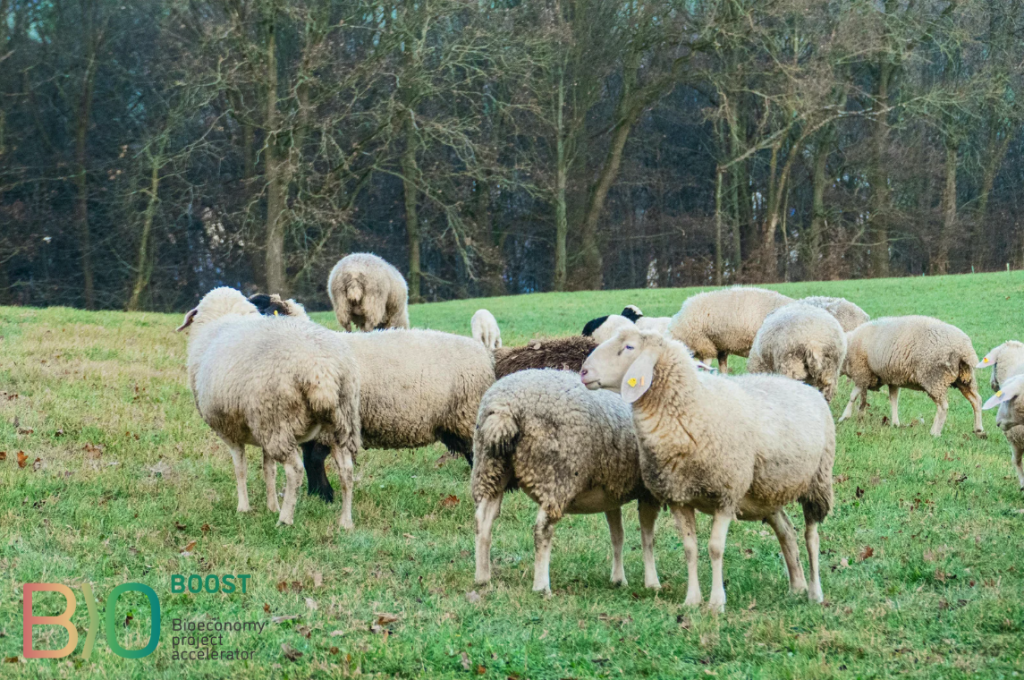
A clear example of this integrated approach is the Biobooster supporting a wool washing and valorisation plant, developed in a rural context where extensive livestock farming plays a key role in landscape management. Beyond the valorisation of a historically underused by-product, the project highlights the role of sheep in maintaining the agroforestry mosaic, reducing fuel loads and, consequently, preventing forest fires. Initiatives of this kind show how productive activities rooted in the territory can become effective tools for environmental and economic resilience, provided they are developed through a project-based vision that integrates land management, economic viability and coordination between public and private actors.
Calls such as the one for resilient agroforestry landscapes demonstrate that public policies are moving towards more integrated models aligned with the bioeconomy. However, access to funding is only part of the journey. The ability to turn these resources into truly transformative and long-lasting projects will depend largely on how these structural challenges are addressed.
In this context, agroforestry landscapes should not be seen solely as areas to be protected, but as key productive infrastructure for the ecological and territorial transition. Unlocking their potential requires long-term vision, collaboration and the right tools to move from strategic intent to real implementation. This is where the bioeconomy can play a decisive role as a driver of environmental, social and economic resilience.
Consult the call here: https://portaldogc.gencat.cat/utilsEADOP/PDF/9584/2129670.pdf